
 Every chiropractor who has been in practice for some time has had a population of patients that did not respond as he would have expected. Oh sure, many of them got relief from the chiropractic care provided, but it only lasted for a few hours—a day, tops. And mind you, we’re not talking about the first few visits, but, rather, a well-established pattern. Or the patient did well with the adjustments, only to have the back misalign again from a trivial event.
It’s been my experience that not every patient  falls into the typical “restore-motion-to-stuck-spinal-joint-and-watch-patient-get-better” category. Sometimes we chiropractors need to acknowledge that not every case of mechanical back pain is due to spinal joints being” stuck” or “locked”—instead, sometimes it’s just the opposite: the joints are too loose.
That Troublesome Sacroiliac
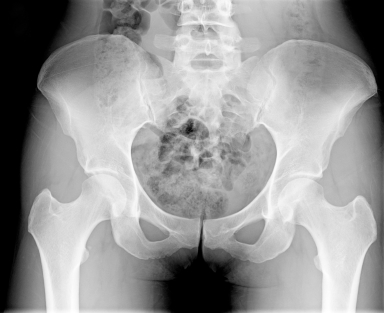
Chiropractors refer to joints that are too loose as being “hypermobile,” and one joint in particular that can easily fly under the radar for some time and wreak havoc in the process, is the sacroiliac joint. Attaching the pelvis to the spine, at first glance this joint doesn’t seem like much. Compared to other joints, it doesn’t really move a great amount. A hypermobile sacroiliac sets up a condition known as an “unstable pelvis.”
 Typically, the sacroiliac joint will become too loose following a tearing, or sprain, of the ligaments that hold it together. This can easily happen from a sudden slip or an event in which you attempt to move something heavy to the side with your leg, or from the unique stresses of pregnancy and childbirth. The result: you feel like your back is “out of place.” The initial findings on history and examination will make this diagnosis sometimes very obvious. But oftentimes, the neighboring musculature will tighten causing pain and dysfunction that distracts the doctor from the true source, as well as causing the joints to actually appear to be stuck and locked.
In other words, the condition, especially if the offending event happened many eons ago and the body has done its best to patch things up, presents like the typical garden-variety mechanical back pain. But, when these tight muscles and locked joints are skillfully relaxed and loosened by a chiropractor or therapist, the patient literally begins to fall apart—for they have just undone the body’s attempt to shore up the problem. And while not ideal, the benefit of undoing everything is that it actually uncovers the problem.
The Indispensable Sacroilliac
What’s so interesting about the sacroiliac joint is that not only does it act to support the weight of the body, but its slight movement is intimately synchronized with the subtle movement of the bones of the skull. It is this concert of motion that assists in the task of pumping cerebrospinal fluid throughout the brain and spinal cord. When the sacroiliac joint is having issues, this “pumping” action becomes disabled and the bones of the skull “lock” in response. This disruption, along with the fact that the sacroiliac joint contains a lot of nerve sensors that affect balance and coordination, can bring about other symptoms that are far removed from the obvious back pain. These problems can sometimes include pain in the jaw, neck, ear, side of chest, groin, and thigh; also, problems can be seen in the knees, ankles, and feet, as well as loss of balance, fatigue, menstrual problems, emotional upset, bed wetting, and headaches. Clearly this is a joint that needs attention if it is in disrepair.
A chiropractor trained in Sacro Occipital Technique (SOT) has the skill set to help a patient to stabilize this wobbly joint. Treatment involves “reseating” the joint with adjusting wedges and between visits a specialized belt is worn to keep the joint in place—allowing the supporting ligaments to heal. Later, exercises are prescribed to help stabilize the area further. With this technique, the joint can truly be given a chance to heal—otherwise, most treatment, or non-treatment, efforts are merely Band-Aids at best.
__________
Contributed by Dr. Thomas R. Lamar, DC.
[originally published in Kingston Community News, April 2010; republished from Dr. Lamar’s spinalcolumnblog.com]
_____________
Source used for this article:
Blum. Sacro-Occipital Technique’s “Category Two”: A Remedy for Fixated Thinking. Dynamic Chiropractic. 24(18). September 1, 2006.
DeJarnette. Sacro Occipital Technique. Sacro Occipital Research Society International (SORSI), Inc. 1984.
Heller. Sacroiliac Instability: An Overview. Dynamic Chiropractic. 24(21). October 12, 2006.
Heller. Sacroiliac Revisited: The Importance of Ligamentous Integrity. Dynamic Chiropractic. 23(14). July 2, 2005.
Sacro Occipital Technique. Chiropractic care – essential for optimal health. (brochure booklet) SOTO (sacro occipital technique organization). Australasia.
Saxon. SOT Participants Guide. A Seminar for Technical Excellence. from the 2003 SORSI seminar – Omaha, NE.