Why “If It Ain’t Broke, Don’t Fix It” Doesn’t Work
If you want to live an active, healthy, long life, the strategy of “if it ain’t broke, don’t fix it” just isn’t going to work. It sounds practical. But with your health, it often means waiting until your body is in crisis before acting. By then, the problem may have been building for a long time.
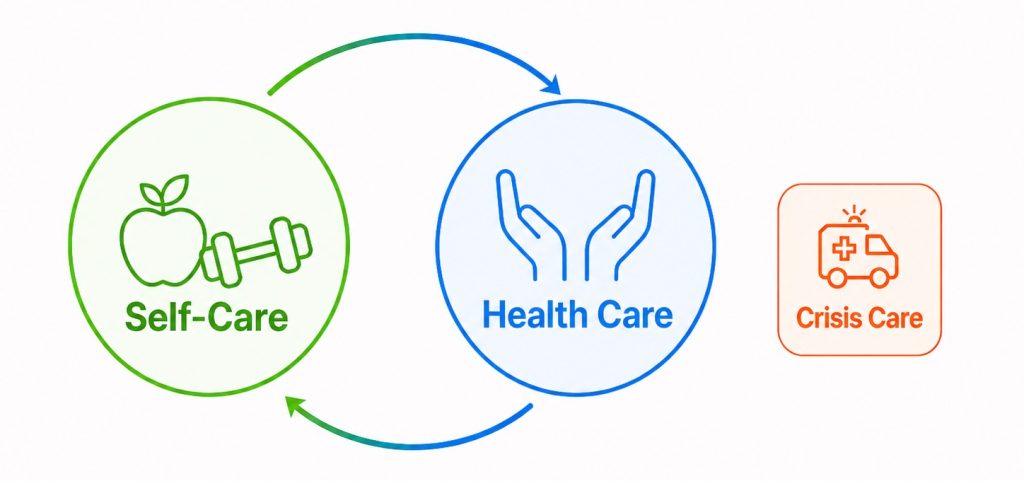
Dr. Eric Plasker, author of The 100 Year Lifestyle, teaches the Health Care Hierarchy: Self-Care first. Health Care second. Crisis Care last. This is more than a list. It is a value system — the difference between crisis motivation and quality-of-life motivation. The goal is not just to live longer. It is to get there in style: active, healthy, strong, and fully alive.
Self-Care: What No One Can Do for You
Self-care is doing what you know you need to do to be healthy that no one else can do for you. No one can chew broccoli for you. No one can take that walk for you. No one can brush your teeth for you. No one can stretch for you.
Self-care is personal responsibility — not harsh, but empowering. There are choices only you can make, habits only you can build, and patterns only you can change. It is how you participate in your own health every day.
Health Care: What You Cannot Do for Yourself
Health care is doing what you know you need to do for your health that you cannot do for yourself. You can brush your teeth, but you cannot give yourself a thorough dental cleaning. You can stretch and watch your posture, but you cannot give yourself a true chiropractic adjustment. I know. I’ve tried. It doesn’t work.
At Anchor Chiropractic, we see chiropractic care as part of a proactive rhythm that supports your spine, nervous system, and whole-body function.
Crisis Care: Necessary, But Not the Foundation
Crisis care is what you need when there is injury, illness, emergency, or serious breakdown. Crisis care matters. We are thankful for emergency rooms, hospitals, surgeons, specialists, and life-saving interventions. Everyone should have a crisis plan. But crisis care should not be your primary health strategy.
In many ways, crisis care is waiting. It waits until something breaks badly enough that you are forced to respond. Crisis care should be like a lifeguard: essential if someone is drowning, but not the one you consult daily for health, strength, vitality, and wellness.
Proactive Care vs. Reactive Care
The Health Care Hierarchy is Self-Care → Health Care → Crisis Care, but that does not mean Crisis Care is the destination. The normal rhythm of a healthy life is really:
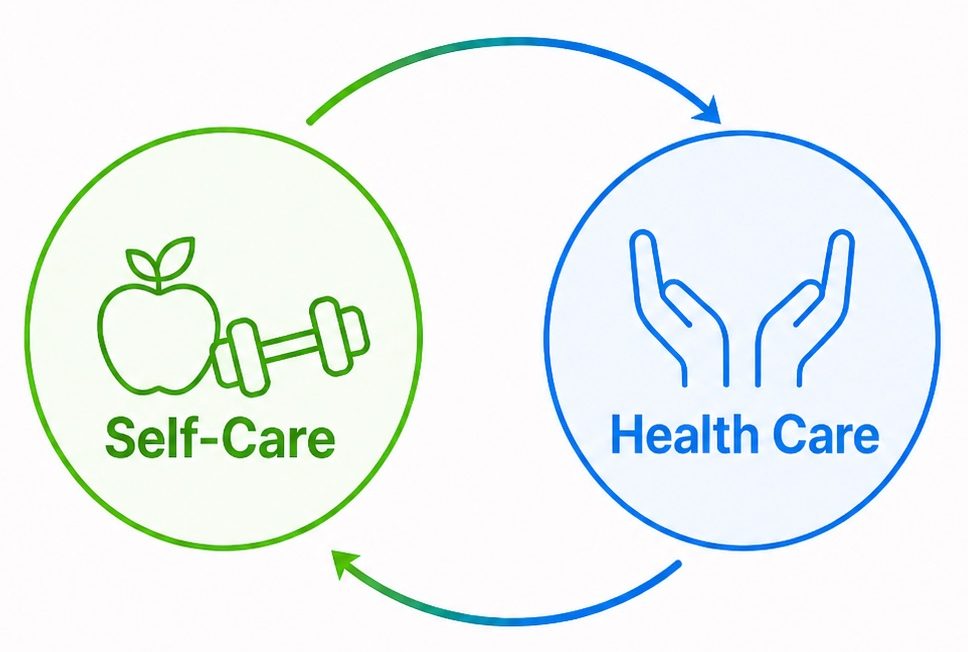
Self-Care → Health Care → Self-Care → Health Care.
Rinse and repeat.
Self-care is what you do for yourself. Health care is the professional support you receive for what you cannot do for yourself. Together, they create a proactive cycle of caring for your body, strengthening function, and supporting your ability to adapt.
This is more than prevention. Prevention still tends to think in terms of avoiding disease, avoiding pain, or avoiding a crisis. Proactive care is bigger than that. It is about building health, capacity, resilience, and quality of life before crisis becomes the motivator.
But many people live in a different cycle: Do nothing → Crisis Care → Do nothing → Crisis Care.
Or: If it ain’t broke, don’t fix it. Wait until it breaks. Patch it up. Go back to waiting. Rinse and repeat.
That is not proactive care. That is reactive care. And it is not a strategy for living an active, healthy, long life. It is crisis management.
Redefine “Broke”
In the crisis-care mindset, “broke” means severe pain, disease, or something bad enough that you can no longer ignore it. But in the 100 Year Lifestyle mindset, “broke” begins much earlier — and it is often more nuanced.
Broke may mean your body is out of balance. Broke may mean your nervous system is under stress. Broke may mean your posture, movement, energy, or adaptability are declining.
These changes are not random. They are clues and cues from your body. Symptoms are not just problems to silence; they are signals worth learning from. They may be telling you that your body is adapting, compensating, protecting, or asking for help before a crisis develops.
If your Health Care Hierarchy has been crisis-motivated, you can choose a better one. Begin with one self-care strategy, one better rhythm, one choice at a time.
You can wait for the crisis. Or you can learn to read your body and choose a better hierarchy: Self-Care first. Health Care second. Crisis Care last.
Build your health around the life you want — not just the crisis you hope to avoid.